Johor Polls: Some buck-up lessons for the political parties & the PM!
(R.Mutharasan)
JOHOR BAHRU: The official results of the Johor state election have delivered critical and far-reaching lessons for Malaysia’s major political coalitions, prompting calls for intense introspection among party leaders.
MUDA and Bersama Forced Into Self-Reflection
The results clearly demonstrated that the Malaysian United Democratic Alliance’s (MUDA) previous success in the Puteri Wangsa constituency was entirely reliant on Pakatan Harapan’s (PH) machinery rather than its own grassroots support. In a significant flip, PKR’s high-profile candidate, Maszlee Malik, emerged victorious in Puteri Wangsa, while the MUDA candidate suffered a heavy defeat. MUDA lost all three other seats it contested. Analysts note that MUDA is now forced to undergo strict self-evaluation due to the losses. MUDA is now also forced to restructure its leadership hierarchy in light of the acquittal of its former leader, Syed Saddiq.
Meanwhile, Bersama proved it still holds the dangerous potential to fragment the political arena. While Bersama faced a string of losses, it successfully split the vote either by diverting traditional PH supporters or by capturing the imagination of new, young voters. The final counts in the Bukit Batu and Perling constituencies underscored this phenomenon, revealing that the Barisan Nasional (BN) emerged as the ultimate beneficiary of Bersama’s vote-splitting. However, the electorate also sent a clear warning to Bersama: navigating the Malaysian political landscape independently, without a robust coalition, is an uphill battle.
BN captures Johor success with second-tier leadership

For Barisan Nasional, the primary takeaway from the Johor victory is the vital importance of showcasing state-level, second-tier leaders. By purposely keeping top federal figures like Ahmad Zahid Hamidi and Mohamad Hasan out of the continuous spotlight, and instead positioning Menteri Besar Onn Hafiz as the ‘poster boy’ and singular, fresh face of the state campaign, BN efficiently tilted the scales in its favour. Observers point out that parties like PKR must urgently replicate this blueprint by identifying and projecting clear second-tier leaders to revitalise their public images.
Furthermore, BN’s victory vindicated the traditional Malay-Chinese-Indian power-sharing structure among UMNO, MCA, and MIC. Moving past recent friction, the BN top leadership allocated four seats to the MIC, all of which were won. This strategic move efficiently consolidated the Johor Indian vote bank behind BN. In a swift acknowledgement of this support, Pannir Selvam, who successfully captured the Perling seat, was appointed to the Johor State Executive Council.
Similarly, the MCA expanded its legislative strength from 4 to 8 seats. Outpacing its fierce rival, the DAP, which managed only six seats, the MCA secured two additional constituencies, intensifying competition in Chinese-majority areas.
Controversy in Negeri Sembilan and Challenges for PH
However, despite the momentum generated by this structured formula in Johor, Barisan Nasional has raised eyebrows ahead of the upcoming polls in Negeri Sembilan. In an unexpected political twist, BN entered into an electoral pact with Perikatan Nasional (PN), which includes PAS. Observers are keeping a close watch on Negeri Sembilan to see if this alliance will backfire, driving moderate and non-Muslim votes away from BN and into the hands of Pakatan Harapan.
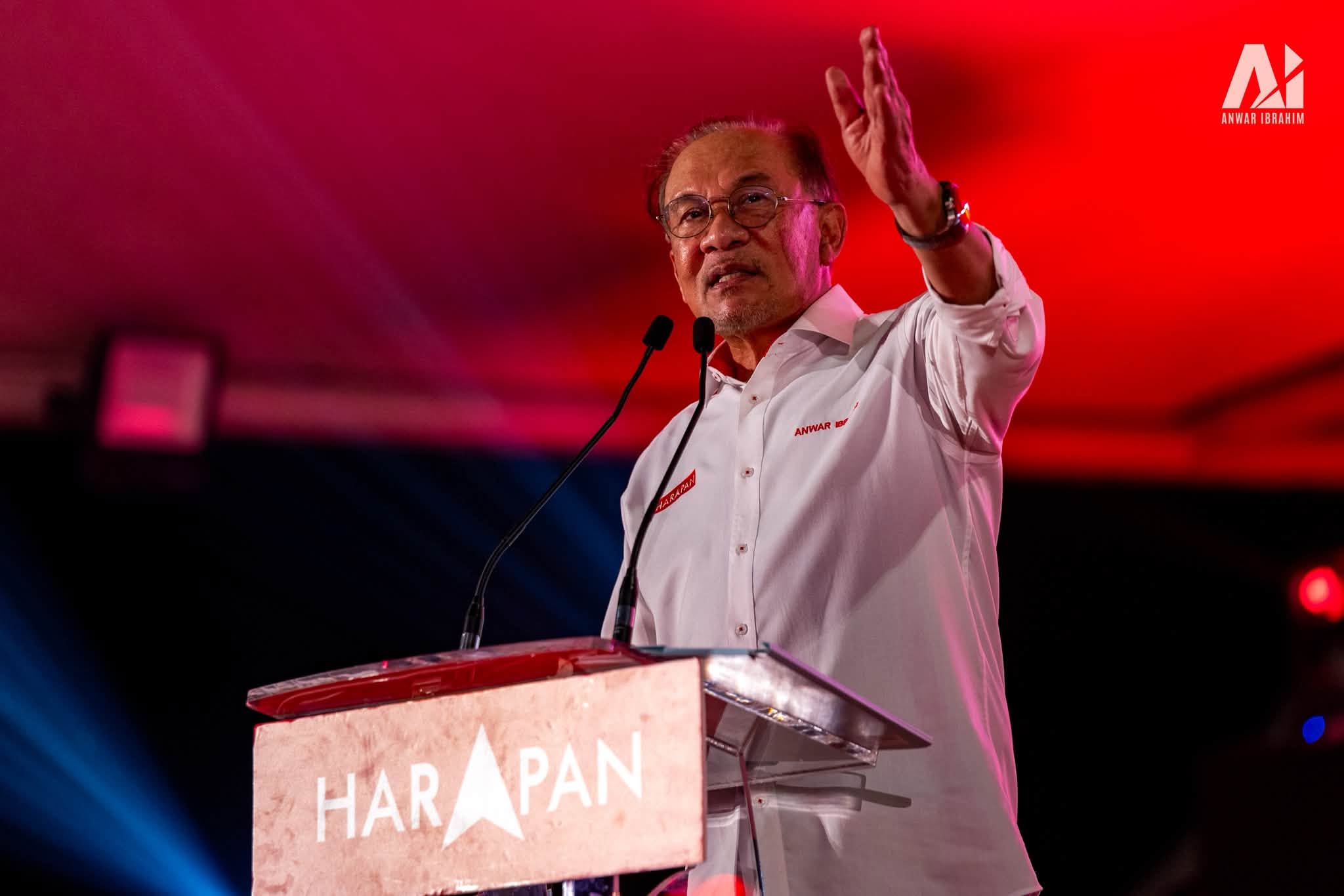
Concurrently, Pakatan Harapan faces its own severe crisis. Political analysts warn that the coalition can no longer bank solely on the personal brand and leadership of Prime Minister Anwar Ibrahim. PH is under heavy pressure to accept dissenting views and to form strategic understandings with neutral, left-leaning, or independent parties such as Bersama, MUDA, and PSM. Now that Bersatu is kicked out of PN and trying to form its own coalition, it is not a bad idea for PH to form an alliance with Bersatu and Tan Sri Muhyiddin Yassin. The Negeri Sembilan results will also enlighten political observers whether the grassroots are still with Bersatu or they have crossed over to Wawasan Negara with Hamzah Zainuddin.
The PH coalition has visibly lost significant Indian support. The absolute lack of a Tamil-speaking minister in the federal cabinet, coupled with the failure to appoint a Tamil-speaking Deputy Chief Minister in Penang, has severely eroded the DAP’s traditional support base within the Indian community. Furthermore, the MCA successfully turned segments of the Chinese electorate against the DAP. The aggressive, unbridled campaigning styles of DAP ministers like Nga Kor Ming have also alienated moderate and neutral Malay voters, a trend the party must urgently address.
Meanwhile, Amanah proved entirely incapable of containing the rising green wave of PAS, failing to swing Malay-Muslim votes in its direction.
A Warning for Prime Minister Anwar Ibrahim
As the political machinery shifts focus toward Negeri Sembilan, the message for Pakatan Harapan is clear: the coalition must urgently review its core ideologies and campaign strategies.
Furthermore, political analysts highlight that Prime Minister Anwar Ibrahim must pivot away from his traditional campaign rhetoric. Repeatedly invoking his past imprisonment and political trials to garner sympathy has lost its efficacy; the public has already vindicated those struggles by elevating him to the office of Prime Minister. Today, the electorate is closely scrutinising his actions, policies, and governance as Prime Minister, rather than his historical grievances.