
Navanethem Pillay becomes fourth Tamil and first Tamil woman to receive Nobel Peace Prize
DURBAN: Former Supreme Court judge Navanethem Pillay has made history as the fourth Tamil person and the first Tamil woman to win the prestigious 2026 Nobel Peace Prize, drawing widespread acclaim and congratulations from the global Tamil community and world leaders.
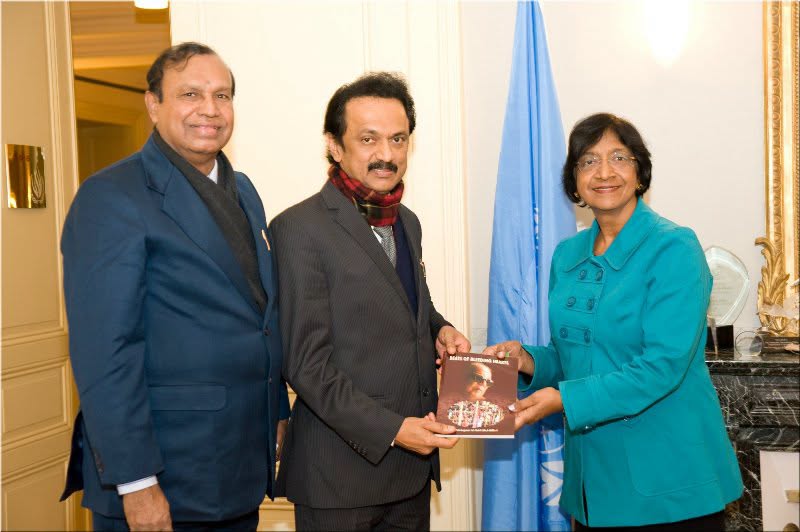
Following the announcement, tributes have poured in globally. Among them was the former Chief Minister of Tamil Nadu, M. K. Stalin, who shared a reflective social media post featuring a photograph (pic) from his 2012 meeting with Pillay. Leaders of international Tamil organisations and global statesmen have similarly praised her recognition.
“My heartfelt congratulations to Ms Navi Pillay on being named the recipient of the 2026 Nobel Peace Prize! This recognition is a tribute to a lifetime dedicated to standing up for the oppressed and the voiceless. I fondly recall meeting her at the United Nations in Geneva in 2012, when I raised the plight of Eelam Tamils and their struggle for justice and dignity. From fighting apartheid to championing human rights across the world, her journey has been defined by courage and conviction. May her lifelong commitment to human rights and justice continue to inspire generations to come!” Stalin posted on his Facebook page.
4th Tamil person to win Nobel Prize
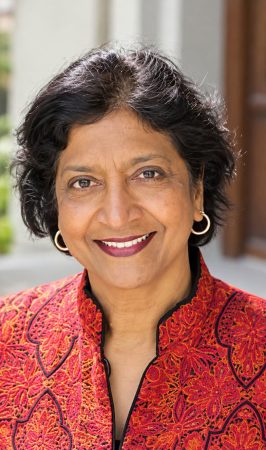
With this honour, Pillay joins a distinguished list of Tamil Nobel laureates. The legacy began in 1930 when Sir C. V. Raman was awarded the Nobel Prize in Physics. Decades later, his close relative Subramanyan Chandrasekhar received the Nobel Prize in Physics in 1983, and Venkatraman Ramakrishnan received the Nobel Prize in Chemistry in 2009 for his pioneering research.
Born in 1941 in Durban, South Africa, Pillay’s background is rooted in historic struggles for justice. Durban is notably where Mahatma Gandhi launched his non-violent civil disobedience movement (Satyagraha). Her parents were indentured labourers brought by British colonisers to work on sugar plantations in Natal. Navanethem Pillay was the fifth child of bus driver Narayanaswamy Naidoo and his wife, Santhamma.
Recognising her academic excellence, her high school principal, V. N. Naidoo, raised public funds from the local community to cover her university tuition fees. After completing her law degree, she established her own legal practice in 1967. During the apartheid era, she actively defended political prisoners, combated state-sponsored police brutality, and successfully secured the release of numerous anti-apartheid activists. Her relentless advocacy led the apartheid regime to label her a subversively dangerous opponent and deny her an international passport.
Despite severe state repression, Pillay persevered. After apartheid fell, she was appointed in 1995 as the first non-white female judge on South Africa’s High Court. She later gained global prominence when she was elected United Nations High Commissioner for Human Rights in 2008.
Throughout her life, Pillay dedicated herself to opposing racial discrimination, colonial oppression, and human rights abuses. While Nobel Peace Prize selections often spark debate, global reaction to Pillay’s award has been overwhelmingly positive, celebrating a lifelong legacy of civil rights advocacy and public service.