Palanivel: The rise and fall of the Master Strategist who rose to MIC’s Helm
*R. Mutharasan*
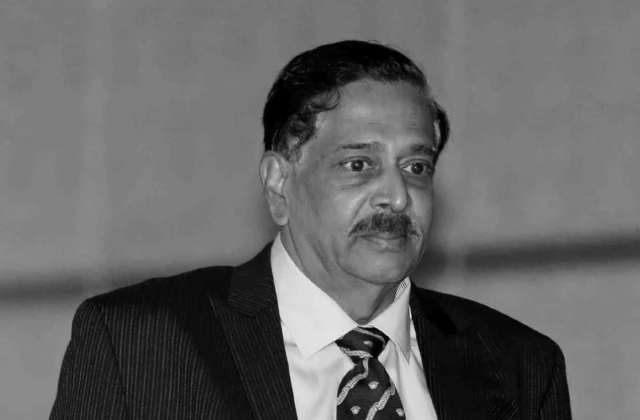
(March 1 marks the birthday of the late Datuk Seri G.Palanivel, the 8th President of MIC. Born on 1 March 1949, he passed away on 17 June 2025 at the age of 76. In this article, R. Mutharasan, editor of Malaysian Indian Today, views the rise and fall of Palanivel, who is often referred to as the “Master Strategist”)
Datuk Seri G. Palanivel, who took office as the 8th National President of the Malaysian Indian Congress (MIC) on December 6, 2010, passed away on June 17, 2025, at the age of 76 due to health complications. Born on March 1, 1949, his political journey was defined by calculated and strategic, timely moves.
Initially, few expected him to reach the pinnacle of politics in MIC since he was not educated in a Tamil school and was unable to read or write fluently in Tamil. He was also not seen as an orator.
However, he advanced through the ranks of MIC by crafting specific strategies for every move. He faced a major setback in the 2008 General Election when he was defeated in the Hulu Selangor Parliament seat due to the political tsunami which swept the country, resulting in Barisan Nasional losing two-thirds majority in Parliament and 5 states.
Ironically, the very strategies he formulated led to his displacement as President in 2014.
From Journalism to the Corridors of Power
Palanivel began his career as a researcher for the Consumers’ Association of Penang (CAP) and briefly worked at Muzium Negara before joining the national news agency, Bernama, as a journalist in 1977. An Arts graduate from the University of Malaya, it was during his job as a reporter covering political news in the 1980s that he built deep connections with the MIC leaders.
Though he was a member of the MIC Petaling branch, he was initially viewed strictly as a journalist rather than a serious politician. His turning point came in 1987 when Tun S. Samy Vellu appointed him as his Press Secretary. His media savvy and the strategic advice he offered during internal party struggles earned him the President’s trust.
The Rise in Ulu Selangor
Palanivel’s formal entry into active politics surprised many when Samy Vellu announced him as the candidate for the Hulu Selangor parliamentary seat in the 1990 General Election. This move coincided with the sidelining of veteran leaders like Tan Sri S. Subramaniam (Subra) and Datuk Pathmanaban, a shift many attributed to Palanivel’s internal strategy to create a leadership vacuum he could fill.
Strategic Party Reforms
Throughout the 1990s, Palanivel operated behind the scenes to restructure the party. He was instrumental in introducing the Division Election System, which shifted power from branch chairmen to division heads. While critics argue this weakened the party’s grassroots connection, it allowed Palanivel to consolidate power by maintaining a direct relationship with roughly 150 division heads and their delegates.
Despite not being a fiery orator in Tamil or a typical “grassroots” politician, his loyalty to Samy Vellu and his ability to manage party machinery saw him appointed as MIC Selangor State Chairman and the party’s Treasurer-General.
Defeating the Giant
For 25 years, the Deputy President post was the stronghold of the late Tan Sri Subra. However, in the 2006 party elections, Palanivel challenged him. His strategy was unique: he did not campaign against Subra himself. Instead, Samy Vellu led the charge, stating he could no longer work with Subra and needed a loyal deputy like Palanivel. This strategy worked, and Palanivel defeated the political veteran Subra by over 400 votes.
The 2008 Setback and the Presidency
The 2008 “political tsunami” dealt Palanivel a heavy blow when he lost his Hulu Selangor seat by a narrow margin of 198 votes. Had he won, he likely would have become a Minister immediately following Samy Vellu’s defeat in Sungai Siput.
Nevertheless, he regained momentum in 2009 by defeating Subra again for the Deputy Presidency. While political pundits predicted the return of Subra as Deputy President again by defeating Palanivel, the political scenario changed when Datuk S. Sothinathan, another close ally of Samy Vellu, also contested for Deputy Presidency. It is widely viewed that some 280 votes swayed in favour of Sothinathan could have tilted the balance in favour of Subra had it been a straight fight between Subra and Palanvel
When Samy Vellu retired in 2010, Palanivel became the Acting President. He was later appointed as a Senator and was brought into the Cabinet by then-PM Najib Razak, restoring the tradition of MIC having two ministerial posts, which ended in 1976.
The Final Chapter
Palanivel won the Cameron Highlands seat in 2013 and was officially elected as the 8th MIC President in the same year. However, his final years were marred by health issues and a bitter legal battle with the Registrar of Societies (RoS) regarding the validity of the 2013 party elections. This conflict eventually led to his removal from the party and the rise of (Tan Sri) Dr S. Subramaniam as the new leader of MIC.
Legacy
G. Palanivel’s life serves as a testament to how an individual without a political pedigree can reach the highest office in MIC and government through strategy, loyalty, and perseverance. His tenure as MIC President, although a short one, would be remembered for its contributions.