
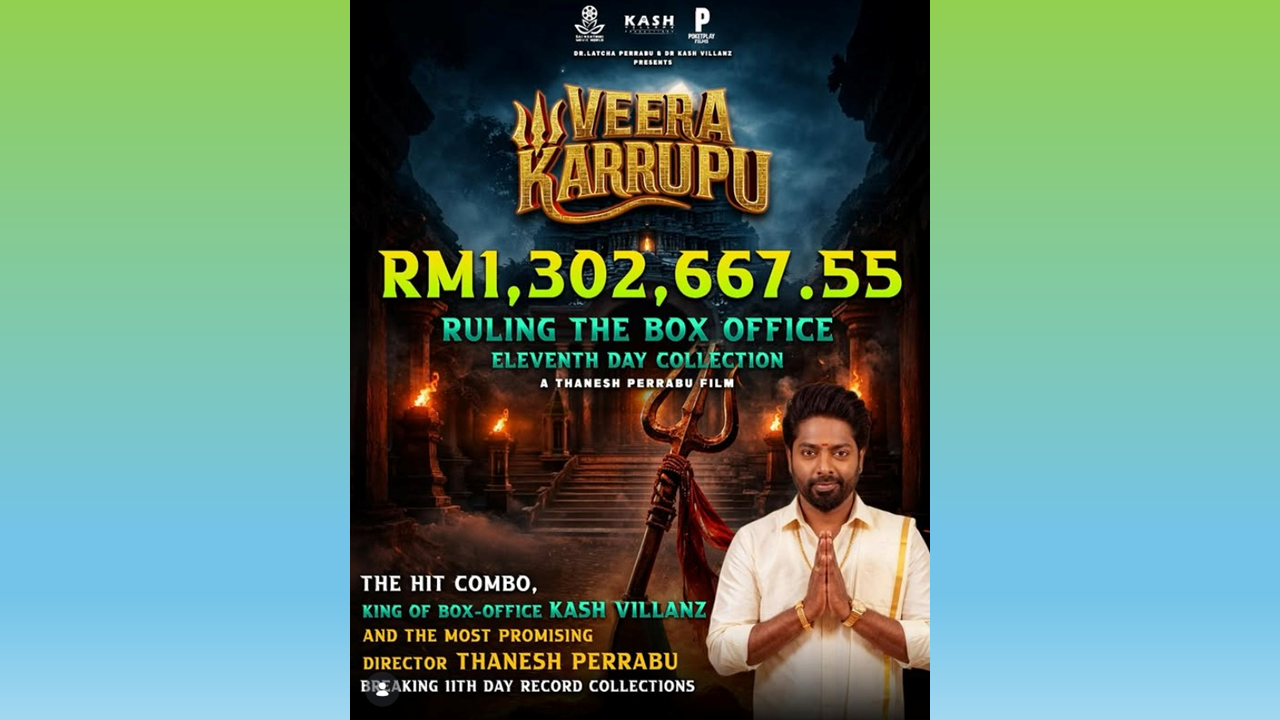
Movie Review: ‘Veera Karuppu’ Malaysian Tamil Film Crosses the RM 1.3 Million Mark
KUALA LUMPUR — It may surprise many to know that Malaysia produces more Tamil-language theatrical films than any other country outside India, a remarkable feat given that the Tamil diaspora is scattered across dozens of nations worldwide.
Despite many locally produced Tamil films historically struggling at the box office, passionate local Tamil filmmakers press on undeterred, releasing at least one new title every month.
The latest to make its mark is Veera Karuppu, which opened in cinemas on March 5 and has since captured the imagination of Malaysian Indians in a way few local productions have managed. Within just nine days of its release, the film crossed the RM 1.3 million threshold, a significant milestone by any measure for a homegrown Tamil production.
A Story Rooted in Estate Life and Folk Devotion
Set against the backdrop of a Hindu temple on an estate in Kedah, the film is steeped in the atmosphere of 1990s plantation life. At the center of the narrative is the deity Veera Karuppu, portrayed as a powerful spiritual guardian and the community whose faith binds them to his shrine.
Directed by Thanesh Perrabhu, the film stars Kash Villanze in the lead role as the son of the temple’s priest. While the film does not distinguish itself technically or offers cinematic experience, its emotional resonance with audiences stems from something far deeper than production values.
Striking a Nerve at a Sensitive Moment
The film’s timing may be its greatest asset. Released at a moment when Malaysian Indians have been disturbed by reports of Hindu shrines being demolished and sacred symbols desecrated, Veera Karuppu appears to have struck a profound chord with its audience, offering both a mirror to their anxieties and a reaffirmation of their cultural and spiritual identity.
In Malaysia, folk deities, sometimes referred to as village or estate warrior deities, or colloquially as “small deities” — often command a following that rivals, and in some communities surpasses, that of mainstream Hindu temples. Veera Karuppu taps directly into this deep-rooted devotional tradition.
The film is not without its flaws. The romance subplot feels uninspired, reminiscent of formulaic scenes from Tamil films of yesteryear. At the same time, the estate villains are drawn from the familiar stock of Tamil cinema clichés — elements that occasionally test the audience’s patience.
Yet these shortcomings are largely overshadowed by the film’s central narrative: the Veera Karuppu deity’s spiritual power and the enduring faith of those who worship at his shrine.
Perhaps most impressive is Veera Karuppu‘s ability to hold its ground in theatres alongside Thai Kizhavi, the Radhika-starrer from Tamil Nadu that has itself been drawing strong crowds. That a local Malaysian production can compete with a big-name Tamil Nadu release speaks volumes about Malaysian Indians’ appetite for stories that reflect their own lives and heritage.
Veera Karuppu is, ultimately, more than a box office statistic. It is a cultural statement and a reminder that the stories of Malaysian Indians, rooted in estate soil and folk devotion, are worthy of the big screen.
‘Veera Karuppu’ is running in selected cinemas nationwide.