Annamalai’s new party attracts more than 1 million members within hours!
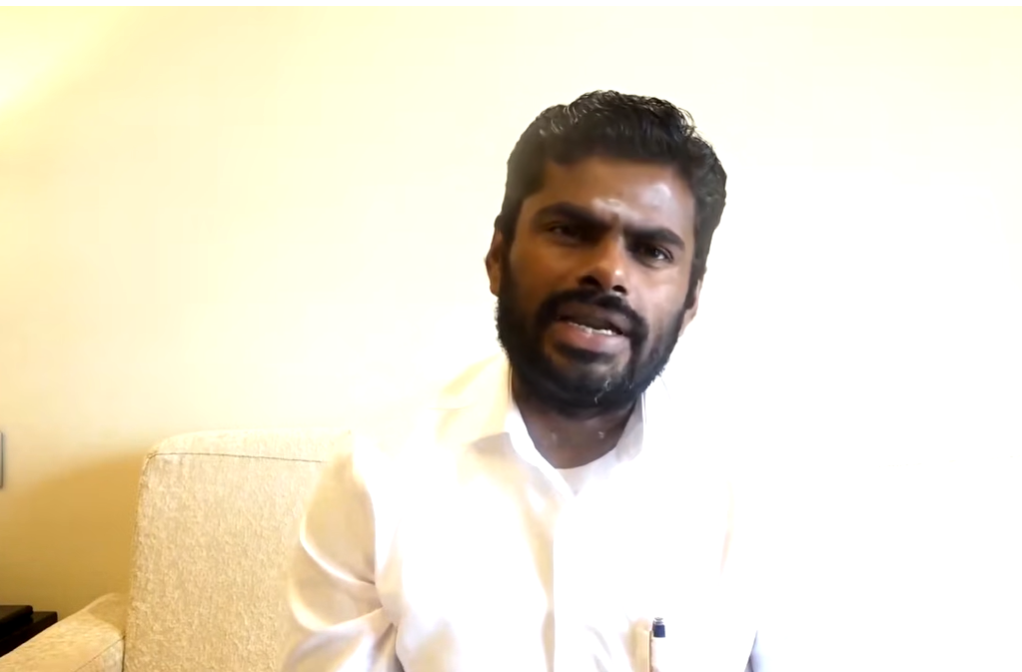
CHENNAI : In a dramatic political development that has fundamentally disrupted the regional landscape, K. Annamalai formally announced his departure from the Bharatiya Janata Party (BJP) to establish an independent political movement. Utilising a live social media broadcast to address his supporters, the high-profile former police officer-turned-politician revealed that his 18-month ideological impasse with the party’s central command had culminated in a polite but firm resignation.
Launching a new doctrine under the definitive banner “Let us change to bring change” (“மாறுவோம், மாற்றுவோம்”), Annamalai declared that his movement would systematically structure its grassroots operations to contest the upcoming Tamil Nadu legislative assembly elections, promising a total departure from the “cult politics” that have governed the state for over sixty years.
The Exit Strategy: A civilised separation in New Delhi
“In the very same room in New Delhi where I was received into this movement with respect, I have returned today to announce the formal alteration of my path with absolute dignity and grace,” Annamalai stated. “It is the foundational hallmark of Tamil culture that even when exiting a household or an institution, one does so with elegant courtesy, without resorting to vitriol or public shouting. It is by that exact code that I step away today.”
The former leader explicitly detailed that his resignation was not an impulsive manoeuvre. He revealed that he had spent the last 18 months quietly articulating his deep-seated strategic disagreements to the BJP national command. On December 4 of the preceding year, he officially notified the leadership of his intent to separate. Out of absolute organisational discipline, he agreed to complete his executive electoral obligations through the end of May before executing a clean break.
The Rajinikanth party: Revealing the 2020 Ultimatum
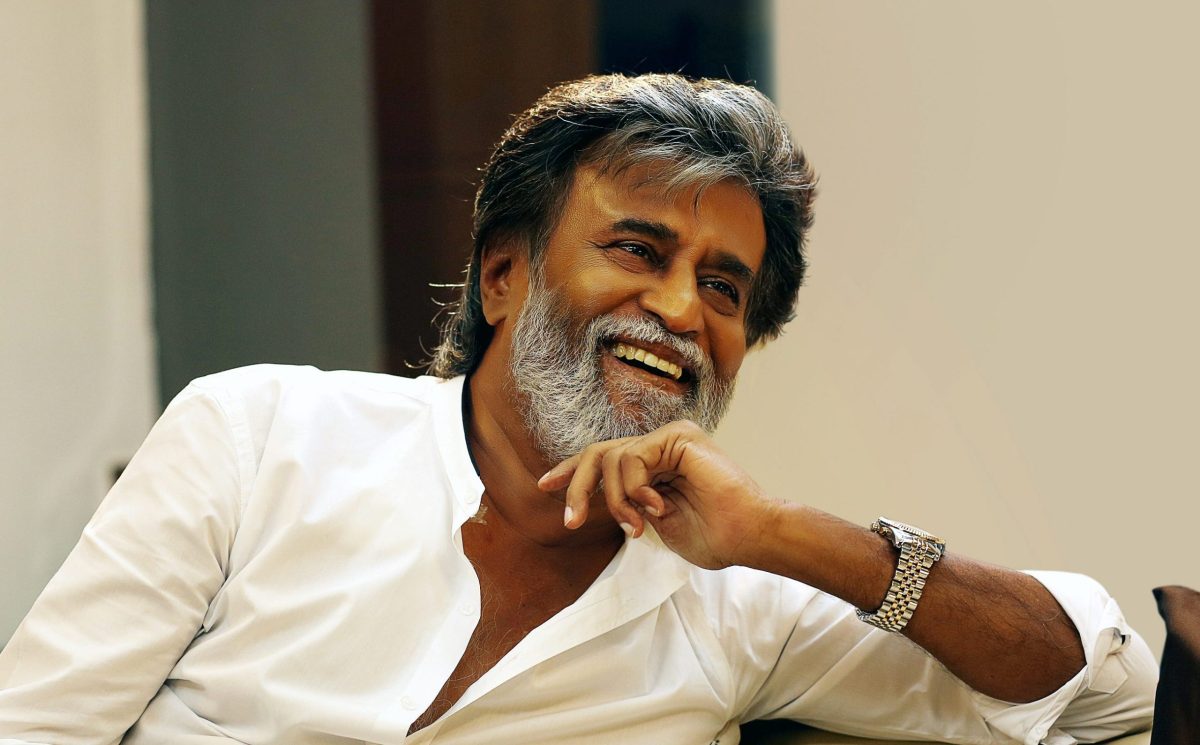
In a major historical disclosure aimed at permanently dismantling long-standing political rumours, Annamalai unveiled details of a high-stakes telephone conversation that took place on August 24, 2020, mere 24 hours before his entry into national politics.
Superstar Rajinikanth, with whom Annamalai had preserved an intimate personal brotherhood since resigning from the Indian Police Service (IPS), placed an urgent call to his desk. The cinematic icon delivered an explicit ultimatum, pleading with Annamalai to abandon his national alignment and instead anchor Rajinikanth’s own upcoming political launch. I declined his offer due to several conflicts.
I told him, ‘Sir, forgive me, but my word has been given, and I cannot break it.’ The following day, I joined the national party. Rajinikanth accepted my decision with immense magnanimity, and our mutual love remains pristine to this day.”
A recurring systemic strain during Annamalai’s tenure was the continuous cross-examination he faced from national commentators regarding his primary allegiance. He stated that his parents had spent their entire lives rooted within the soil of Tamil Nadu, practising baseline agriculture. His own career, however, forced him to cross state lines to read at IIM Lucknow, undergo elite administrative training in Hyderabad, and spend nine years executing high-stakes policing operations as an IPS officer in Karnataka.
This sweeping geographic exposure forged a distinct philosophical worldview that frequently clashed with regional partisan alignments.
While contemporary Dravidian political entities aggressively assert that regional pride requires the complete eradication of national sentiment, Annamalai forcefully rejected this race-based polarisation. “I move through every room as an unshakeable Indian patriot, anchored by the ancient, pristine lineage of my Tamil heritage,” he declared.
Wielding this exact framework, Annamalai frequently locked horns with national interests to insulate the equity of his home state. He reminded his audience that when the neighbouring Karnataka administration, despite being governed by his own party, vowed to build the controversial Mekedatu Dam, he left his office to launch a fierce, high-profile hunger strike in Thanjavur to defend Tamil Nadu’s riparian rights. He maintained that across complex industrial disputes involving methane extraction, hydrocarbon exploration, and coal mining concessions, he consistently neutralised federal overreach through sophisticated, quiet negotiation rather than performative statehouse theatrics.
Dismantling Individual Cults: The Structural Promise of Term Limits
The central pillar of Annamalai’s new movement is a total war against the individual personality cults that have dominated Tamil Nadu’s political discourse for over half a century. In a direct programmatic challenge, he emphasised that his organisation would completely bar personal worship, image-worship, and sycophancy. To demonstrate his commitment, he explicitly prohibited his cadres from pasting sycophantic posters or organising public celebrations for his 42nd birthday.
Furthermore, Annamalai unveiled a revolutionary, rule-based internal governance model engineered to permanently break down dynastic consolidation: The Codification of Strict Term Limits.
Under this pending party constitution, a definitive cap will be placed on the number of terms any individual can serve as a Member of the Legislative Assembly (MLA), a Member of Parliament (MP), or a cabinet minister.
“We are completely breaking down the toxic paradigm of the permanent leader, the permanent legislator, and the permanent minister,” Annamalai stated with absolute finality. “On the day our movement formally registers as a political party, the foundational clause of our charter will read: ‘No seat is permanent for any human being.’ This rule begins with me and applies to every single cadre without exception.”
The Blueprint for Transformation: Abdul Kalam Centre for Ethics and Politics
To build an administrative vanguard capable of replacing current statehouse networks, Annamalai announced the immediate activation of the APJ Abdul Kalam Centre for Ethics and Politics in the industrial hub of Coimbatore. Operating under the structural governance of his existing non-profit, ‘We The Leaders’ (www.vleader.org), this academy will serve as the exclusive mandatory training engine for all future candidates.
Annamalai indicated that his strategic vision was directly captured from his personal interactions with the late President Dr APJ Abdul Kalam during his days as a young officer. The academy will focus heavily on reviving Kalam’s PURA (Providing Urban Amenities to Rural Areas) master plan, reversing the structural decay of village economies by injecting state-of-the-art infrastructure directly into agrarian sectors.
To achieve this, the movement is launching an intensive global outreach campaign targeting the elite Tamil diaspora embedded across Western technology corridors. Annamalai pointed out that the highest executive offices of multinational giants, including Alphabet, Meta, Intel, Micron, and Nvidia, are heavily populated by high-achieving Tamil technocrats. His movement seeks to harvest this immense intellectual capital by creating an institutional channel for global software architects, financial experts, and scientists to return to their native soil and run for public office.
Fraternal Parity: A Clean Break Without Malice
“We are not entering the arena to contest out of hatred or to scream down our opponents,” Annamalai affirmed. “They will present their platforms to the citizenry, and we shall present ours. The sovereign voter will evaluate our character and determine our place.”
Reflecting on his historic exit interview with Union Home Minister Amit Shah, Annamalai noted that he chose to look the state chief in the eye to outline his strategic departures, completely rejecting the cowardice of submitting a cold, bureaucratic resignation letter via text message.
Since his announcement of forming a new party, social media reports indicate that more than 1 million members have joined his party through online applications. Several BJP leaders are said to be leaving the party in droves to join Annamalai’s new party, “We the Leaders.”