
Negeri Polls: Record number of Indian candidates across several parties
SEREMBAN: The ongoing Negeri Sembilan state assembly election has created a record for featuring an unprecedented number of Indian candidates, signalling a dramatic shift in the state’s political landscape and voter demographics.
Prior to 2008, under Barisan Nasional (BN) rule, the Malaysian Indian Congress (MIC) was traditionally allocated two state seats, consistently winning both and securing one State Executive Council (Exco) portfolio. Outside of MIC, Indian representation in the state assembly was exceedingly rare. This dynamic shifted in 2008 when opposition parties PKR and DAP successfully fielded winning Indian candidates. Prior to 2008, Indian candidates rarely won a state assembly seat in Negeri Sembilan. However, even then, winning the Negeri Sembilan state government was a distant dream for the opposition until 2018. In that year, Negeri Sembilan fell into the hands of Pakatan Harapan, and the success was repeated in 2023.
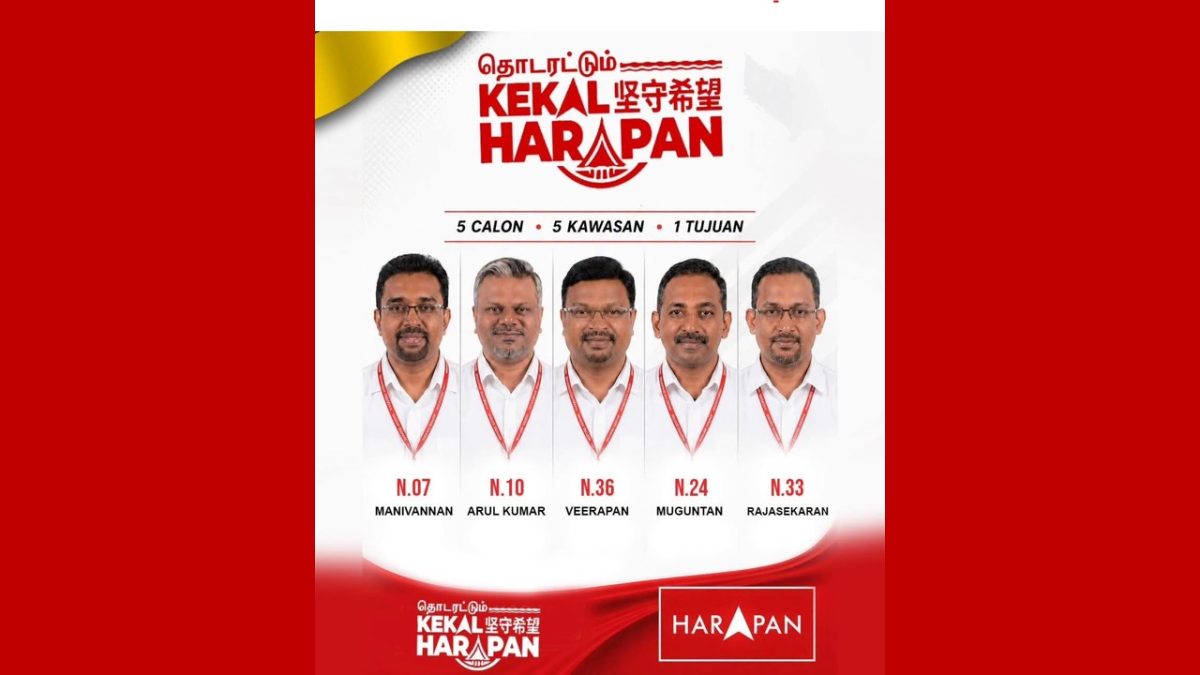
In the current election cycle, major political parties, excluding independent contenders, have announced a total of 14 Indian candidates across the state’s constituencies. Within Pakatan Harapan (PH), DAP has fielded three Indian candidates, while PKR has fielded two.
Barisan Nasional initially raised eyebrows across the political spectrum by announcing four seats for MIC. However, after unveiling candidates for only 25 constituencies, BN ceded the remaining 11 seats to Perikatan Nasional, which included PAS, as part of an electoral arrangement. Consequently, MIC was ultimately allocated its traditional share of two seats under the BN banner, namely Seremban Jaya and Sri Tanjong.
In the 11 constituencies where BN is not contesting, an alliance comprising PAS, Hamzah Zainudin’s Wawasan Negara, the Malaysian Indian People’s Party (MIPP), and Gerakan has fielded candidates. Notably, PAS has fielded an Indian candidate in Negeri Sembilan for the first time in its history, alongside an Indian candidate from MIPP. This shift highlights a growing consensus among Malay-majority parties that Indian votes, even if constituting a smaller percentage, remain crucial in tight, multi-cornered contests.
Meanwhile, political dynamics within the opposition have fractured. Unlike in the Johor state election, where PAS maintained a collaborative stance with Muhyiddin Yassin’s Bersatu under the Perikatan Nasional (PN) banner, PAS has taken an opposing route in Negeri Sembilan. With Bersatu sidelined from the coalition framework in this state contest, Bersatu announced it will contest independently under its own party logo. Political and legal analysts note that this rift between PAS and Bersatu could potentially trigger regulatory scrutiny over the Perikatan Nasional banner by the Registrar of Societies (RoS).
In another unexpected development, Bersatu, contesting 24 state seats, has fielded five Indian candidates. Joining forces with Bersatu is Professor P. Ramasamy, leader of the Urimai party. Under this arrangement, two Indian candidates from Urimai will contest using the Bersatu logo. Ramasamy’s debut campaign in support of Bersatu is expected to introduce an intriguing dynamic to the Negeri Sembilan polls.
While analysts view the record participation of Indian political figures and community parties as a positive sign of civic engagement, observers warn that multi-cornered fights involving Indian candidates running under rival party tickets will likely split the Indian vote bank. Consequently, only a small number may ultimately secure election to the state assembly. Nevertheless, community leaders have welcomed the heightened political representation and focus extended toward the Indian electorate.