
Sanusi Nor’s remarks, flare up already heated Negeri polls
SEREMBAN: In the iconic film 16 Vayathinile, directed by the late Bharathiraja, a famous exchange takes place where Rajinikanth’s villainous character, Parattai, misleads a visiting marriage party and poisons them with false character assassination of heroine Sri Devi, prompting Goundamani to famously quip: “Patha vachittiye Parattai” (You’ve set the fire, Parattai!). That phrase remains a staple of popular conversation among Tamils. Today, a strikingly similar dynamic is unfolding across the political battlefield of Negeri Sembilan.
Following the electoral understanding struck between Barisan Nasional (BN) and Perikatan Nasional (PN), driven primarily by PAS, sparks began to fly across social media, with critics warning that the alliance would cost BN vital non-Muslim votes. Leaders within Pakatan Harapan (PH) quickly seized on the friction.
Penang DAP Senator Dr Lingeshwaran Arunasalam publicly challenged MCA and MIC leadership to explain their stance on cooperating with PAS. Concurrently, Batu MP P. Prabakaran, joined by PKR assemblymen, released a video statement urging Indian voters to recognise that BN had aligned itself with a party known for stoking sensitivities surrounding Hindu temples. While young leaders within MCA also voiced open frustration over the potential exodus of non-Muslim support, MIC initially maintained a disciplined silence.
In fact, just last week, MIC National President Tan Sri S. A. Vigneswaran defended the electoral pact, publicly challenging PH leaders to explain the fundamental difference between Amanah and PAS. The general consensus among BN component parties was that aligning with PAS through Perikatan Nasional would yield a net gain in Malay-Muslim votes.
Sanusi Hands Over the Burning Torch
While political observers were fanning minor sparks of controversy, Kedah Menteri Besar and PAS Election Director Muhammad Sanusi Md Nor arrived in Jempol to campaign for the BN-PN candidates. Addressing a campaign rally, Sanusi declared: “The Chinese have China, the Indians have India, the Cambodians have Cambodia, and the Siamese have Thailand, the Malays only have Tanah Melayu (Malaysia).” The incendiary remarks immediately set off a firestorm across the state’s political landscape.
Vigneswaran speaks out
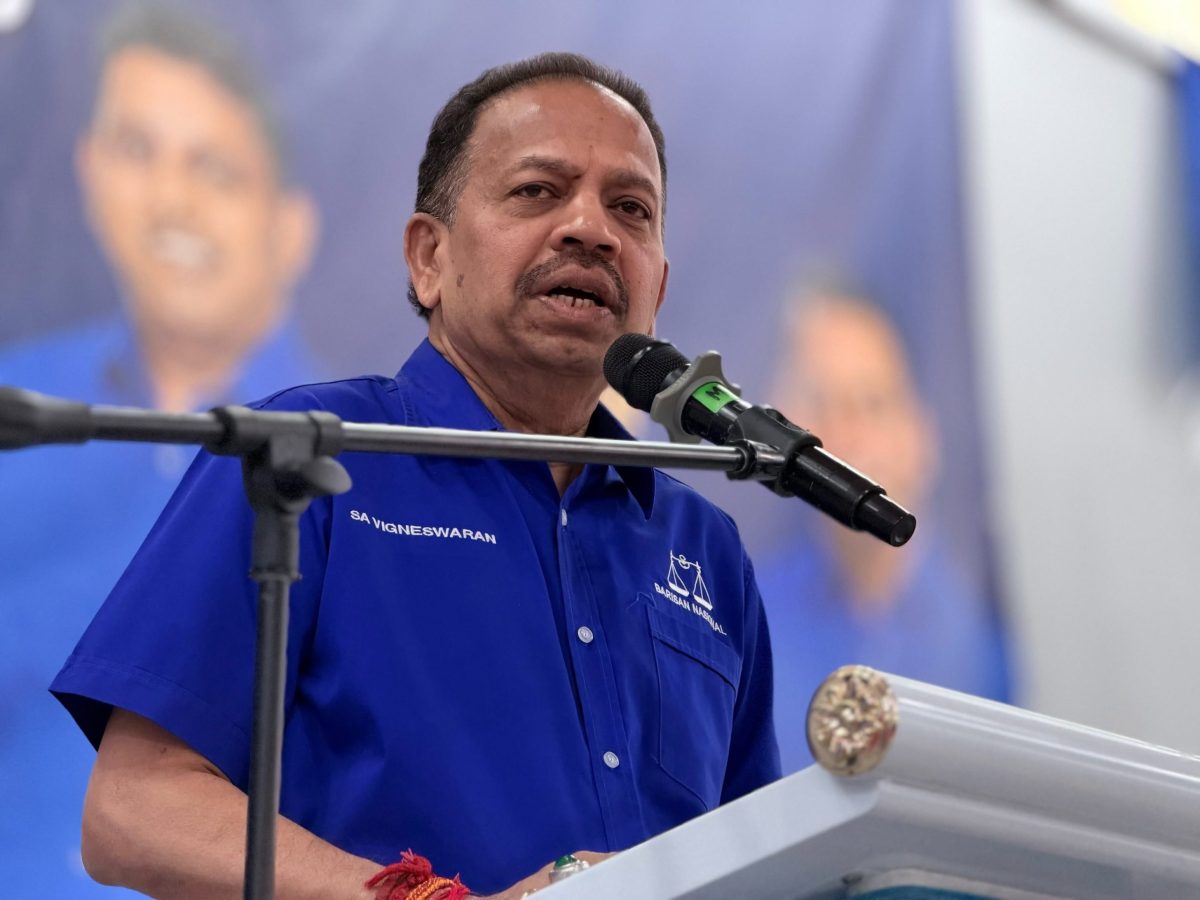
Sanusi’s remarks forced a dramatic pivot. Tan Sri Vigneswaran boldly reflected the growing outrage within the Indian community, publicly warning that inflammatory rhetoric from PAS leaders was alienating non-Muslim voters. In a striking statement, he suggested that Barisan Nasional would be better off contesting independently.
The significance of Vigneswaran’s shift cannot be overstated. Just last year, it was Vigneswaran who officially moved a resolution at the MIC General Assembly proposing that MIC join the Perikatan Nasional coalition alongside PAS. Yet, in a press statement issued on Friday (July 24), Vigneswaran drew a sharp distinction between Islamic political entities: “Look at Amanah. They are also an Islamic party, but they do not utter remarks that hurt non-Muslims. They respect Malaysia’s multi-ethnic society.”
Pakatan Harapan leaders have aggressively capitalised on the controversy during their campaign trail. Hulu Selangor PKR chief Dr Sathiaprakash lodged a formal police report against Sanusi at the Seremban district police headquarters, accusing him of inciting racial division.
As polling day approaches, political analysts note that while the BN-PN pact may consolidate a higher share of Malay-Muslim votes, BN now faces the genuine risk of an offset from non-Muslim voters. The true extent and localised impact of this political spark will only become clear once the final election results are thoroughly analysed.