
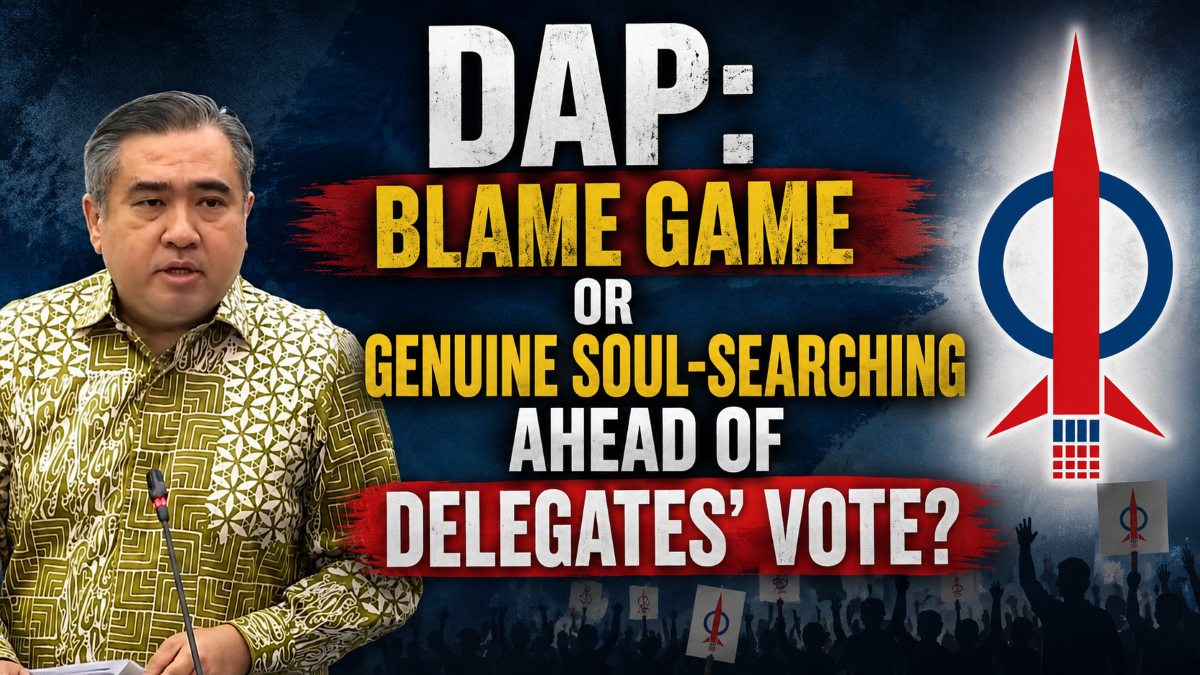
DAP: Blame game or genuine soul-searching ahead of Delegates’ vote?
Mounting pressure amidst electoral setbacks
DAP leadership has increasingly pointed fingers at the government’s slowed pace of institutional reforms and controversial corruption-charge discharges involving senior coalition partners. Critics, however, argue that DAP spent years operating as part of the Cabinet, holding key ministerial and deputy ministerial portfolios, without making decisive moves or raising public objections when compromise decisions were made.
For example, on the decision to delay the release of the RCI report on Tabung Haji DAP leaders did not utter a word, but now everyone blames Anwar for holding on to the report.
Inward Reflection or Shifting Blame?
It was only after severe losses at the ballot box, particularly among its core Chinese voter base, that DAP leaders began framing their performance as a failure of the administration to deliver on reform promises. Observers note that, rather than confronting internal strategic missteps, the party leadership appears focused on shifting responsibility onto Prime Minister Anwar Ibrahim and the unity government partners.
Political analysts contend that if DAP delegates simply vote to stay in government while continuing to blame external coalition dynamics, it will reinforce public perceptions that the party prioritises cabinet positions over genuine accountability. In recent days, DAP leaders seem to be pushing for a decision to remain in the government while pushing for reforms. No one knows how this could be achieved at a time when UMNO-BN has clearly broken ranks with the Pakatan Harapan coalition, indicating that the Madani government, of which DAP is part, does not have majority support either in Cabinet or in Parliament.
To regain voter trust, analysts emphasise that DAP must look beyond internal rhetoric, engage with broader societal feedback outside party walls, and chart a clear, accountable strategy moving forward.