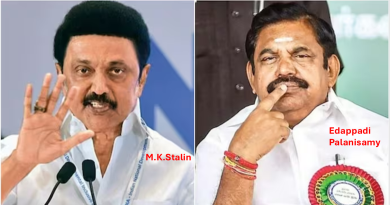
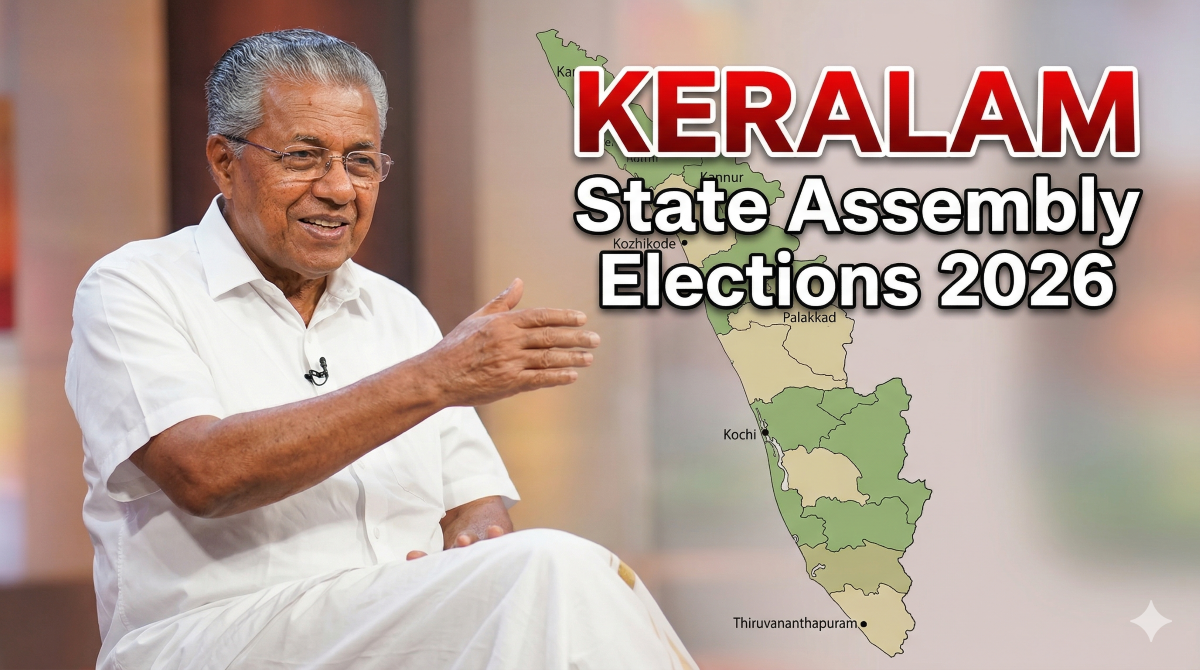
Keralam: Pinarayi Vijayan, can he perform a hat-trick?
Thiruvananthapuram: As Tamil Nadu prepares for its upcoming assembly elections, its neighbour Kerala, now officially renamed “Keralam” by the Union Government, is also gearing up for a high-stakes democratic battle.
Elections for the 140-seat Kerala Assembly will be held in a single phase on April 9. In synchronisation with Tamil Nadu, the vote counting is scheduled for May 4. Unlike the political turbulence often seen in Tamil Nadu, Kerala’s major coalitions have displayed remarkable clarity, finalising alliances and announcing candidates almost immediately after the election dates were declared.
The Battle for a Hat-trick
Breaking Kerala’s historical trend of alternating power between rival fronts, the Left Democratic Front (LDF), led by the Communist parties under Chief Minister Pinarayi Vijayan, has secured two consecutive terms. The central question now is whether they can pull off a historic third consecutive victory.
The seat-sharing breakdown for the Left is as follows:
- CPI(M): 81 seats
- CPI: 25 seats
- Others: Remaining seats shared among smaller allies and independents.
The Congress Challenge and Political Ironies
The Congress party, which is widely expected to put up a formidable fight to reclaim power, is contesting 95 seats, while its key ally, the Muslim League, will field candidates in 27 constituencies.
Interestingly, a unique political irony persists: the two Communist parties that are staunch allies of the Congress in Tamil Nadu remain their primary rivals in Kerala, where they fight as a unified front against the Congress-led UDF.
Factors Working Against the Incumbent
Political analysts suggest that the road back to power may be uphill for Pinarayi Vijayan. Factors such as incumbency fatigue, his advancing age, and a perceived lack of significant developmental progress over the last decade under his leadership have created a palpable undercurrent of opposition. Furthermore, high-profile campaigning by Rahul Gandhi and Priyanka Gandhi has bolstered expectations of a leadership change in the state.
The BJP: The Emerging Third Front
The BJP is positioning itself as a serious third contender. After securing its first-ever parliamentary seat in the state through actor Suresh Gopi in the last general elections and causing an upset by winning the state capital Thiruvananthapuram’s Corporation in local body polls, all eyes are on the saffron party. Political observers are waiting to see if the BJP can deliver more “shocks” in this assembly race.
Contrasting political landscape of Keralam and Tamil Nadu
The political landscapes of Kerala and Tamil Nadu offer a fascinating study in contrast, particularly regarding the relationship between the Congress and the Communist parties.
While both states are heading to the polls simultaneously, their alliance structures follow completely different logic based on regional rivalries.
Kerala vs Tamil Nadu: Key Alliance Differences
| Feature |
Kerala
|
Tamil Nadu
|
|
Primary Rivalry
|
LDF vs. UDF: The Left and the Congress are bitter arch-rivals fighting for the same throne.
|
SPA vs. Opposition: The Left and Congress are close allies under the DMK-led Secular Progressive Alliance (SPA).
|
|
Communist Strategy
|
The CPI(M) and CPI lead the Left Democratic Front (LDF) to keep Congress out of power.
|
The Communist parties contest as junior partners of the DMK to keep the BJP/NDA out. |
|
Congress Strategy
|
Leads the United Democratic Front (UDF) as the main challenger to the ruling Left.
|
Contests as a major partner within the DMK alliance (allotted 28 seats in the current 2026 state assembly elections).
|
|
Common Enemy
|
Both see the BJP as a threat, but their internal rivalry is the defining factor of the state’s politics. |
Both prioritise defeating the BJP-AIADMK front, viewing ideological unity as paramount.
|
Why the Duality?
The most striking “interest factor” for observers is that a voter in Tamil Nadu might see Rahul Gandhi and Pinarayi Vijayan as ideological partners fighting for “secularism,” but just a few miles across the border in Kerala, they are the primary political antagonists.
- In Tamil Nadu, the alliance is driven by a shared goal to resist the BJP’s influence in the Dravidian heartland.
- In Kerala, the BJP has historically been a distant third (though growing), so the primary struggle remains the traditional Left-versus-Right (Congress) battle that has defined the state for 70 years.
Emerging “Third Poles” in 2026
Both states are seeing a disruption of their traditional bipolar systems:
- In Kerala, the BJP (NDA) is aggressively trying to turn the contest into a three-cornered fight, buoyed by recent local body wins and a parliamentary seat.
- In Tamil Nadu, Actor Vijay’s new party, Tamilaga Vettri Kazhagam (TVK), and Seeman’s NTK are emerging as a new “third pole,” challenging the decade-old DMK-AIADMK dominance.