
Johor: UMNO’s strategic logic behind an early election!
By R. Mutharasan
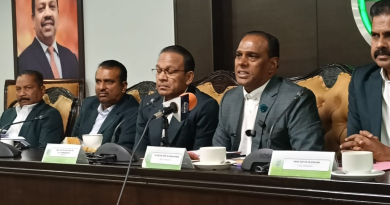
Johor Menteri Besar Onn Hafiz: A Legacy of Political dynasty
To fully comprehend the contemporary political leadership of Johor, one must peer through the prism of its extraordinary genealogical lineage. When Johor first began operating under a modern administrative framework, Datuk Jaafar Muhammad was anointed its inaugural Menteri Besar. Assuming the mantle of leadership in 1886, he governed for 33 years until his demise, securing his position as the state’s longest-serving head of government.
In the subsequent decades, the state leadership repeatedly descended upon Jaafar’s sons and grandsons. The incumbent Menteri Besar, Datuk Onn Hafiz Ghazi, is the great-great-grandson of Jaafar Muhammad, making him the fifth direct descendant of this illustrious political dynasty to hold Johor’s highest office.
The branches of this singular family tree effectively chart the genesis and evolution of modern Malaysian statecraft. Jaafar Muhammad’s son, Dato’ Onn Jaafar, famously founded UMNO in 1946 and was appointed as Johor’s Menteri Besar that very same year. Onn Jaafar’s son, Tun Hussein Onn, subsequently scaled the pinnacle of national power, succeeding Tun Razak as Malaysia’s third Prime Minister from 1976 to 1981. It is also interesting to note that the wives of both the Prime Ministers, Tun Razak and Tun Hussein Onn, were sisters.
Hussein Onn’s son, Datuk Seri Hishammuddin Tun Hussein, is a formidable heavyweight within the upper echelons of UMNO today. Meanwhile, the current Menteri Besar, Onn Hafiz, is the maternal grandson of Tun Hussein Onn.
This deep historical backdrop demonstrates that Onn Hafiz is no conventional technocrat elevated by political convenience. He is the custodian of a profound and powerful political patrimony.
Under his stewardship, the Johor UMNO-Barisan Nasional (BN) apparatus has transformed into the epicentre of national political discourse. Although the state administration’s official mandate does not expire until April 2027, intense speculation has ignited that the legislative assembly will be dissolved prematurely to trigger snap polls.
These rumours gained significant momentum following the official announcement that the Johor State Assembly would convene for a single day on June 22. The conspicuous absence of a legislative agenda for this extraordinary sitting has led astute analysts to infer that the session has been engineered exclusively to dissolve the assembly and precipitate an immediate state election.
The Strategic Logic Behind an Early Johor Election
Political observers view the calculated push for early snap polls in Johor as a masterstroke by UMNO as it rigorously calibrates its strategy for the 16th General Election (GE16). The Johor UMNO state chapter has already unilaterally declared its intent to contest all 56 state assembly seats independently under the Barisan Nasional banner. While UMNO President Datuk Seri Ahmad Zahid Hamidi has kept his cards close to his chest, Prime Minister Datuk Seri Anwar Ibrahim has indicated plans to navigate the matter with him directly.
UMNO-BN is widely expected to coast to a comfortable majority in Johor, heavily insulated by the implicit patronage of the Johor palace, Onn Hafiz’s robust popular approval ratings, and a notable absence of polarising state-level controversies. Out of the 56 state constituencies, BN currently commands 40 seats (UMNO holds 33, MCA holds 4, and MIC holds 3).
UMNO’s grand strategy is to utilise a dominant, solo triumph in Johor to unequivocally demonstrate its resurgent popularity and leverage that momentum to contest GE16 entirely on its own. By bypassing a formal state-level alliance with DAP, UMNO aims to prevent a defensive consolidation of the Malay opposition vote bank, which seems to oppose UMNO for forging an alliance with its arch-rival DAP. Furthermore, entering the fray unfettered by a seat-sharing formula with Pakatan Harapan (PH) allows BN to appease its traditional component allies, MCA and MIC, by distributing choice, winnable seats among them.
With the wider Malay electorate deeply fragmented, UMNO calculates that it can effortlessly secure the lion’s share of majority-Malay seats and comfortably retain the state government. Given these compounding systemic advantages, BN appears almost certain to embark on a solo campaign in Johor.